
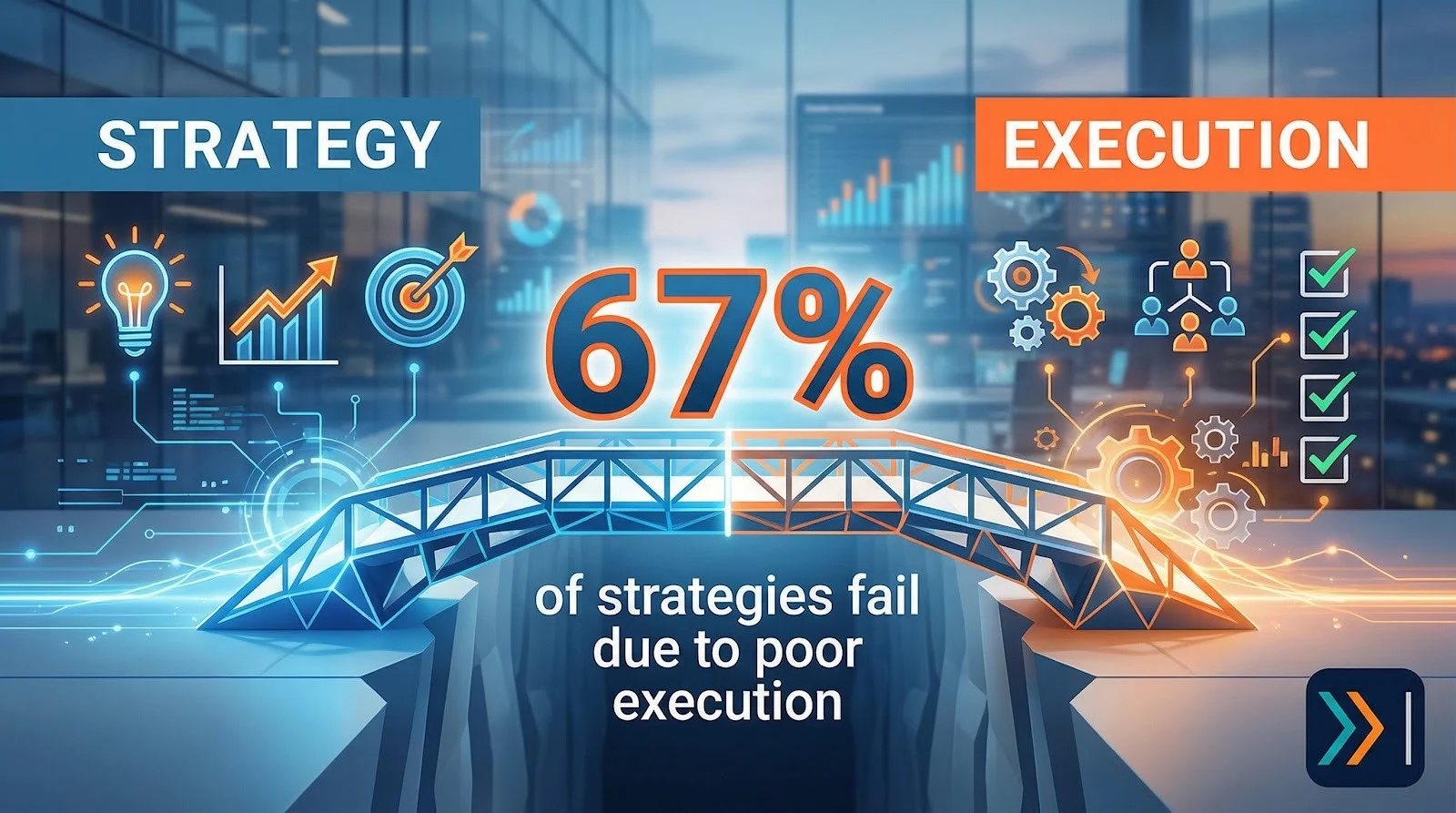
It is a truth universally acknowledged that a brilliant strategy, in possession of a good fortune, must be in want of a flawless execution. Yet, a staggering 67% of well-formulated strategies tragically fail due to poor execution [1]. This chasm between a company’s strategic vision and its operational reality is not just a minor inconvenience; it’s a primary obstacle to growth, innovation, and sustained success. For many leaders, the frustration is palpable: the boardroom is buzzing with ambitious plans, but the frontline is struggling to translate them into tangible results. This article provides a practical, actionable framework for bridging this critical implementation gap, transforming your strategic blueprints into marketplace victories.
The Great Divide: Why Does the Strategy-Execution Gap Exist?
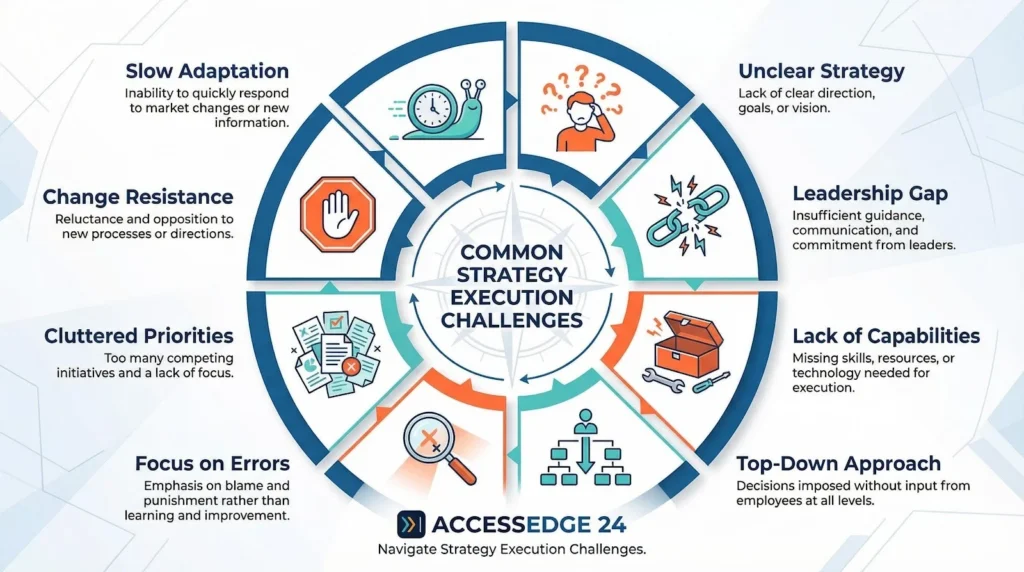
The reasons for this disconnect are multifaceted, often stemming from a combination of organizational, cultural, and leadership-related factors. Research from McKinsey and other leading institutions reveals a consistent pattern of challenges that plague even the most well-intentioned organizations. A primary culprit is the lack of clear communication and alignment. In fact, a staggering four out of five executives concede that their company’s overarching strategy is not well understood throughout the organization [2]. When employees are unclear about the company’s direction and their role in it, their efforts become disjointed, and the strategy loses its power.
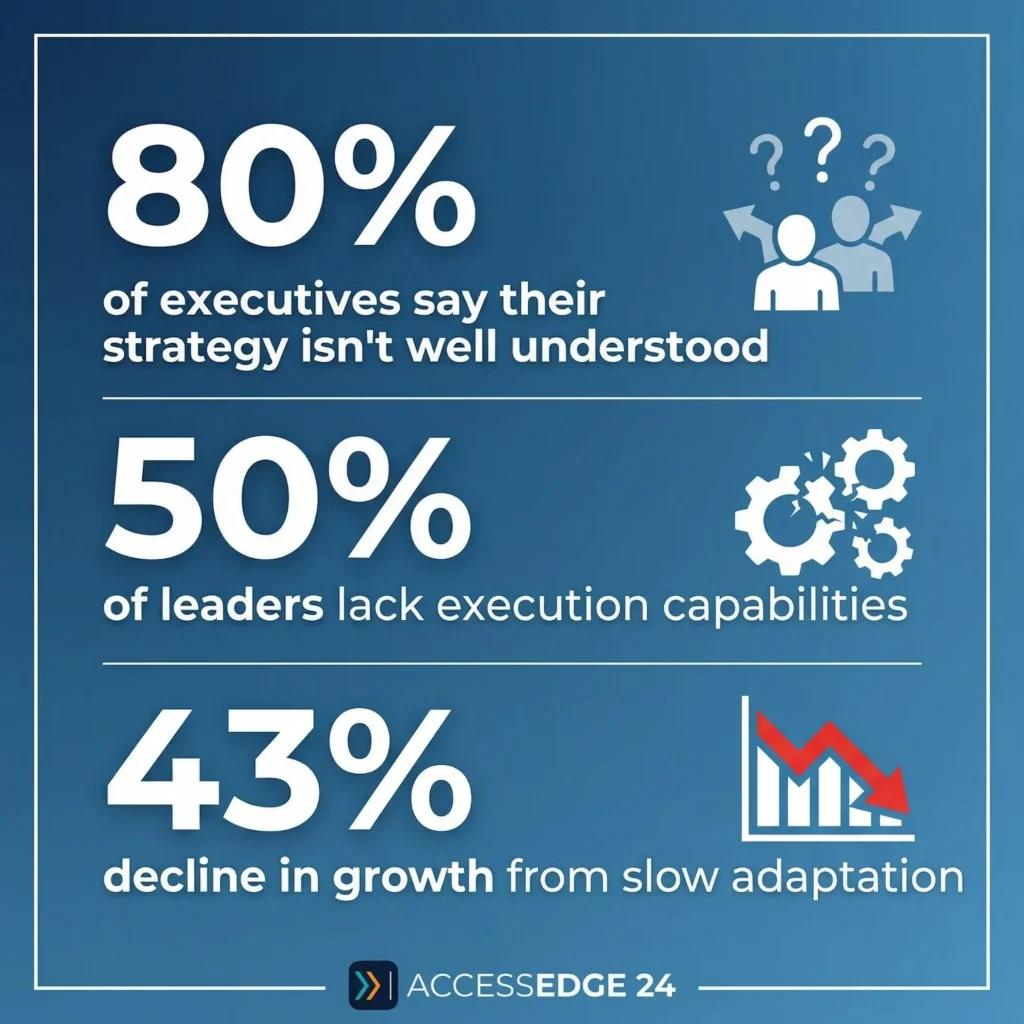
Furthermore, a significant leadership gap often exacerbates the problem. Half of top leaders lack proficiency in the very attributes required for effective strategy execution, and two-thirds of CEOs admit they lack the capabilities needed to create value [2]. This deficiency at the top trickles down, creating a ripple effect of ambiguity and inaction. To compound the issue, many organizations suffer from a top-down approach to execution, where decisions are made in isolation from the teams responsible for implementation. This not only disempowers employees but also robs the organization of valuable frontline insights that could inform a more effective execution plan.
For those looking to deepen their understanding of strategic alignment, we recommend exploring resources like The Strategy-Ready Organization, which offers a comprehensive framework for building a cohesive and execution-focused team. Business Transformation
Building the Bridge: A 4-Step Framework for Closing the Gap
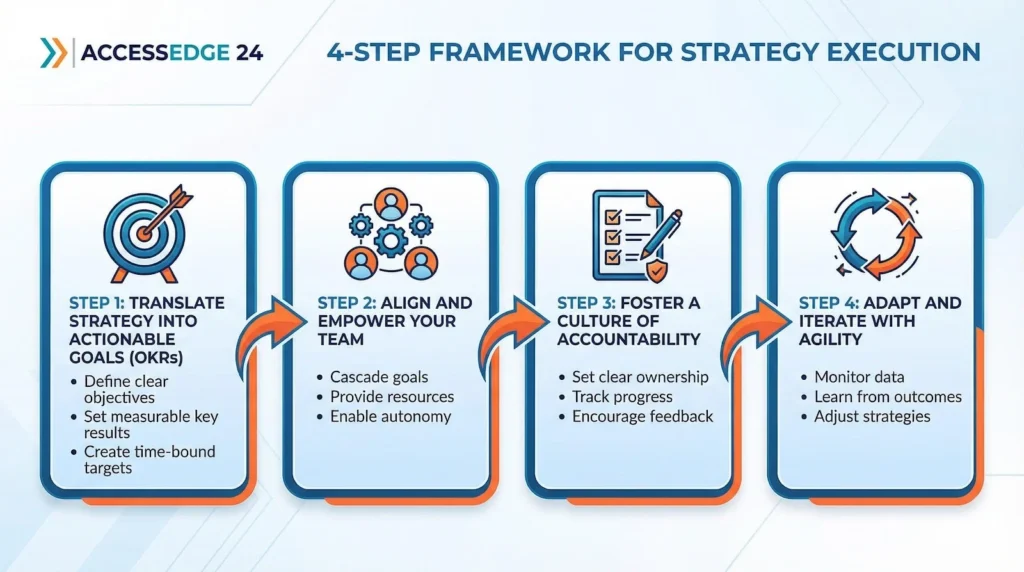
Closing the strategy-execution gap is not about finding a single silver bullet, but rather about building a sturdy bridge supported by four key pillars: translating strategy into actionable goals, aligning and empowering your team, fostering a culture of accountability, and adapting with agility.
Step 1: Translate Strategy into Actionable Goals (OKRs)
A high-level strategy is merely a starting point. To make it actionable, it must be broken down into specific, measurable, achievable, relevant, and time-bound (SMART) goals. A powerful framework for this is Objectives and Key Results (OKRs), which provides a clear line of sight from the company’s overarching objectives to individual contributions. By setting clear OKRs, you provide your team with a roadmap for success, ensuring that everyone is pulling in the same direction. Need help defining your strategic objectives? Book a Strategic Discovery Call with our experts to gain clarity and focus.
Step 2: Align and Empower Your Team
With clear goals in place, the next step is to align and empower your team to achieve them. This involves more than just communicating the strategy; it requires creating a culture of ownership where every employee understands their role and feels empowered to take initiative. Providing your team with the necessary resources, autonomy, and a collaborative environment is crucial. Project management tools can be invaluable in this regard, fostering transparency and seamless collaboration. For instance, a tool like [Project Management Tool] can significantly enhance your team’s ability to work together effectively. Execution Excellence
Step 3: Foster a Culture of Accountability and Transparency
Accountability is the bedrock of successful strategy execution. When individuals and teams take ownership of their goals and are held accountable for their results, the organization as a whole becomes more effective. This requires establishing clear lines of responsibility, tracking progress transparently, and creating a feedback loop for continuous improvement. A culture of accountability is not about blame; it’s about learning, growing, and collectively striving for excellence. Ready to build a high-performance team? Request a proposal to see how our solutions can help you foster a culture of accountability.
Step 4: Adapt and Iterate with Agility
In today’s dynamic business landscape, no strategy can be set in stone. The ability to adapt and iterate is crucial for long-term success. This means continuously monitoring your progress, learning from both successes and failures, and being willing to make necessary adjustments to your strategy along the way. An agile mindset allows you to respond to changing market conditions, seize new opportunities, and stay ahead of the competition.
The ACCESSEDGE 24 Advantage: Your Partner in Execution
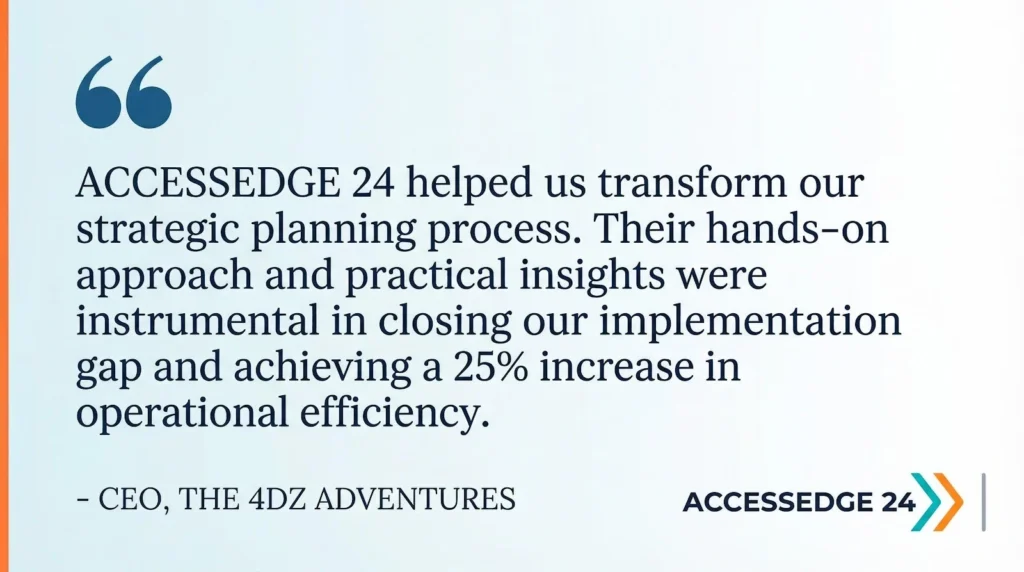
At ACCESSEDGE 24, we specialize in helping businesses like yours bridge the strategy-execution gap. Our team of experienced consultants works with you to develop a customized approach that aligns with your unique goals and challenges. We don’t just provide advice; we partner with you to implement practical solutions that deliver tangible results. But don’t just take our word for it. Here’s what one of our clients had to say:
Ready to turn your strategic vision into reality? Partner with us to close your implementation gap and accelerate your growth. For those looking to deepen their knowledge, we recommend this comprehensive course on strategy execution: Leadership Mastery
Conclusion
The journey from strategy to execution is fraught with challenges, but it is a journey that every successful organization must undertake. By understanding the common pitfalls and implementing a structured approach to execution, you can bridge the implementation gap and unlock your organization’s full potential. Don’t let your brilliant strategy become another statistic. Take the first step today.
Book a Strategic Discovery Call today and start your journey from strategy to execution.